
How to Let Children Discover the Pythagorean Theorem for Themselves
The relationship between the lengths of the three sides of a right triangle is known as the Pythagorean theorem (in Japanese, also called the “theorem of three squares,” sanheihō no teiri). Under the curriculum of Japan’s Ministry of Education (MEXT), children learn this theorem in the third year of junior high school (ages 14–15). In Montessori education, by contrast, children may learn it as early as the fourth grade of elementary school (around age 9)1.
Understanding Through Experience, Not Explanation
In the conventional MEXT curriculum, children are expected to understand the Pythagorean theorem by listening to the teacher’s explanation. There is a test to check their understanding, and passing it counts as having understood. Even if a child has merely memorized the formula and can solve particular test questions, that is, even without truly grasping the principle, a high enough score means the child is considered to have understood.
In Montessori education, on the other hand, children come to understand the Pythagorean theorem through discovery, by playing freely, as their interest leads them, with unique learning materials called “materials” (kyōgu). Without even realizing it, a child ends up proving the theorem on their own, much like the mathematician Euclid2, author of the Elements.
The Montessori Material for Learning the Pythagorean Theorem
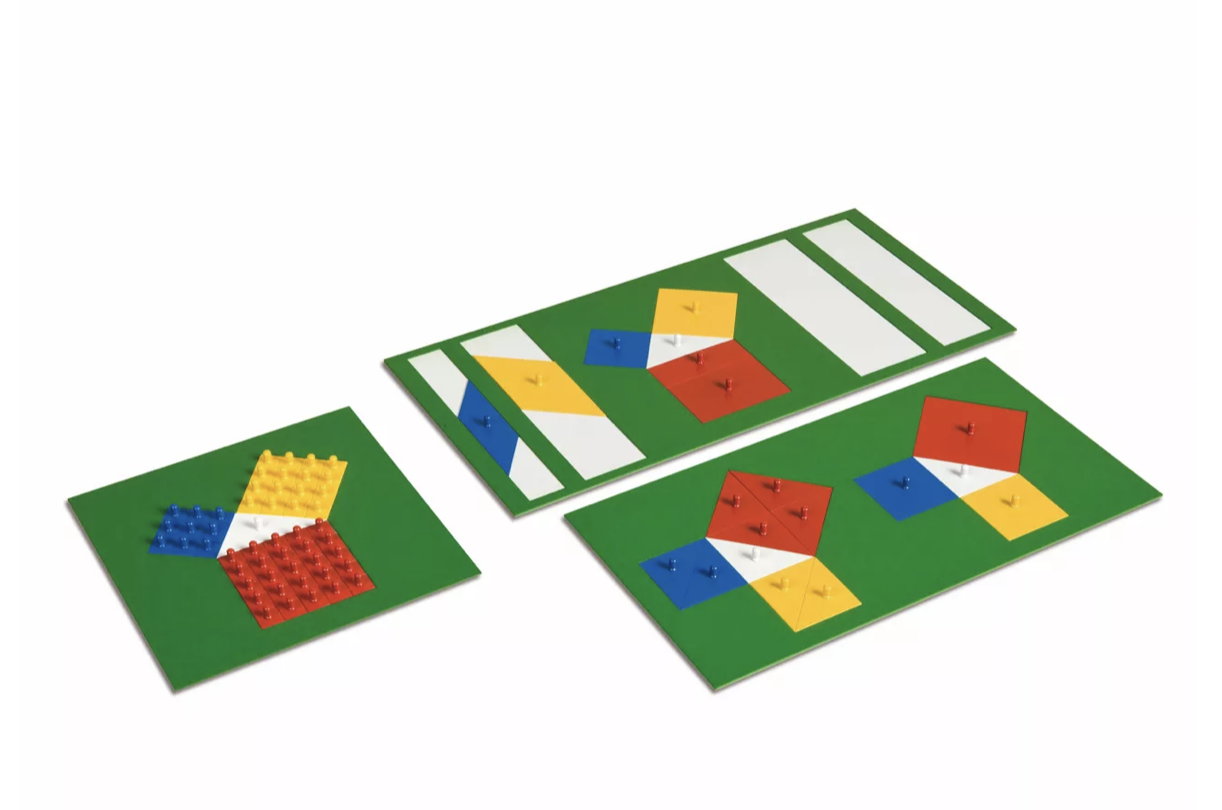
This material consists of three puzzles, each of which is a proof of the Pythagorean theorem for one of the following cases:
① An isosceles right triangle
② A right triangle with sides in the ratio 3:4
③ Any right triangle
A detailed explanation follows below.
A Craft Kit for the Pythagorean Theorem Material
Or so I intended. But a mathematical explanation would be complicated and hard to follow, so instead I made a craft kit that lets you grasp the idea intuitively through hands-on experience. Feel free to use it, within the bounds of common sense.
NOTE
This kit is licensed under a Creative Commons Attribution-NonCommercial-NoDerivatives 4.0 International License.
The three files correspond to the three puzzles. Each PDF has three pages. Page 1 is in color, so you can simply print it and cut out the pieces. Page 2 is black and white, so you will need to color it in. Page 3 is also black and white, with color markings as a guide. Use whichever page you like to make your own material. Printing on card stock makes the pieces easier to handle.
How to Use the Craft Kit
From here on, I will assume you have printed the craft kit and have it at hand.
① An Isosceles Right Triangle
Let’s start with the first puzzle.
We will use the material made from Craft Kit ①.
You can check that you have all the pieces against the figure below.
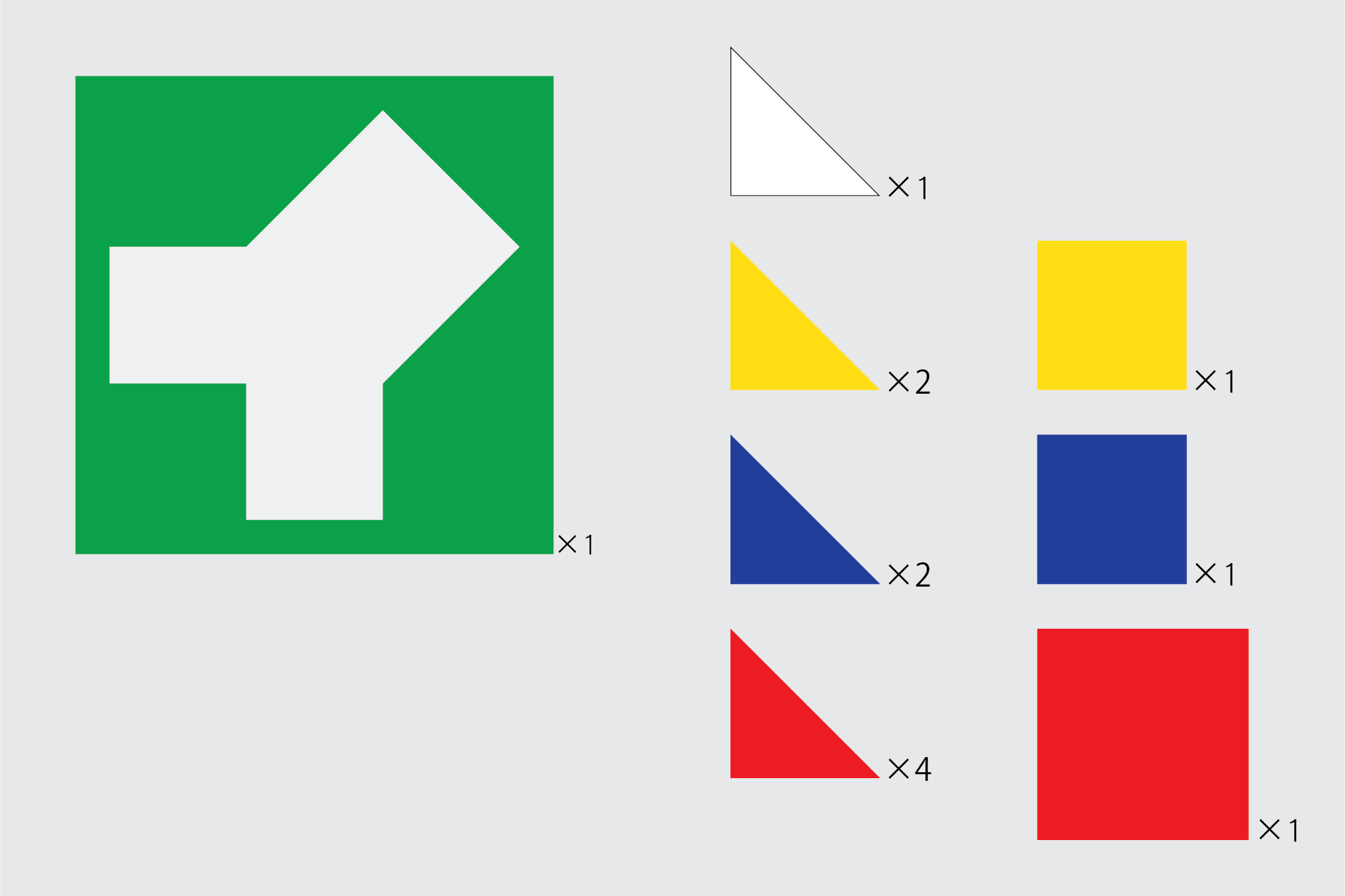
First, confirm that the white isosceles right triangle and the three colored squares fit exactly into the green frame.

Next, confirm that each of the three colored squares can be replaced by the isosceles triangles of the same color.
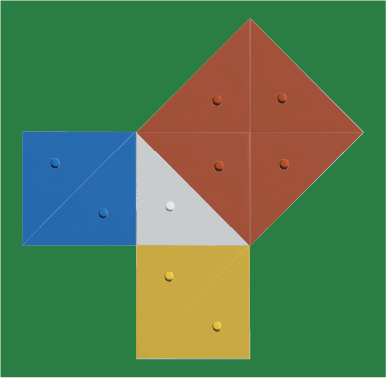
So far, we have found the following:
- Area of the large red square area of the four red isosceles right triangles
- Area of the yellow square area of the two yellow isosceles right triangles
- Area of the blue square area of the two blue isosceles right triangles
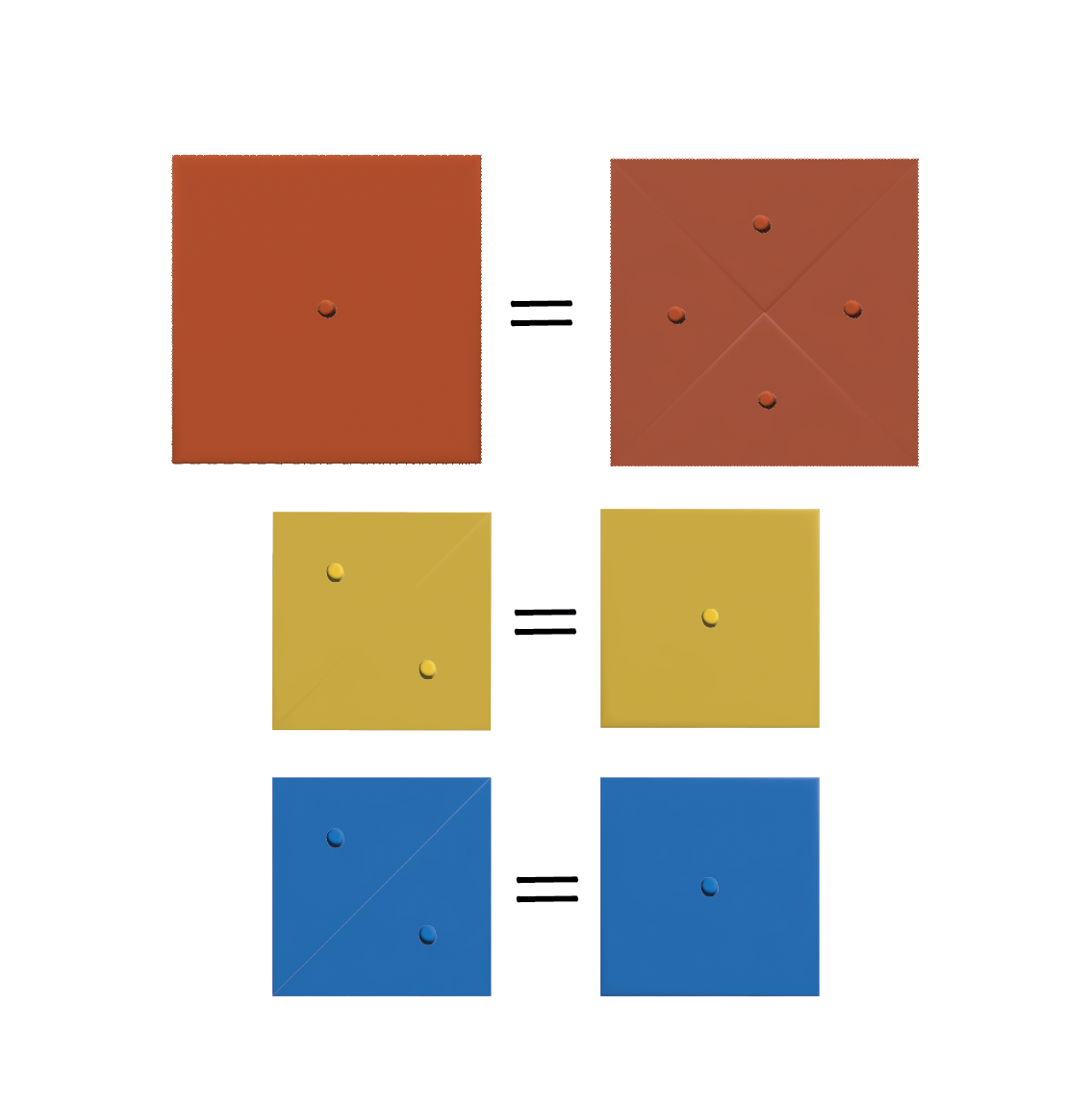
Finally, confirm that the red isosceles triangles and the blue and yellow isosceles triangles can be swapped and still fit exactly.
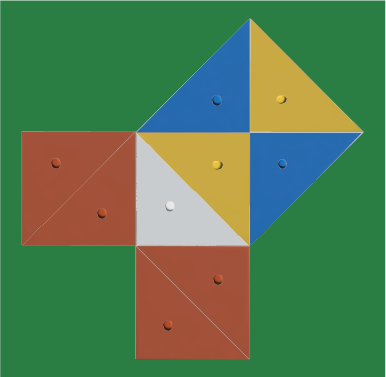
This shows the following:
- Area of the large red square area of the blue square area of the yellow square
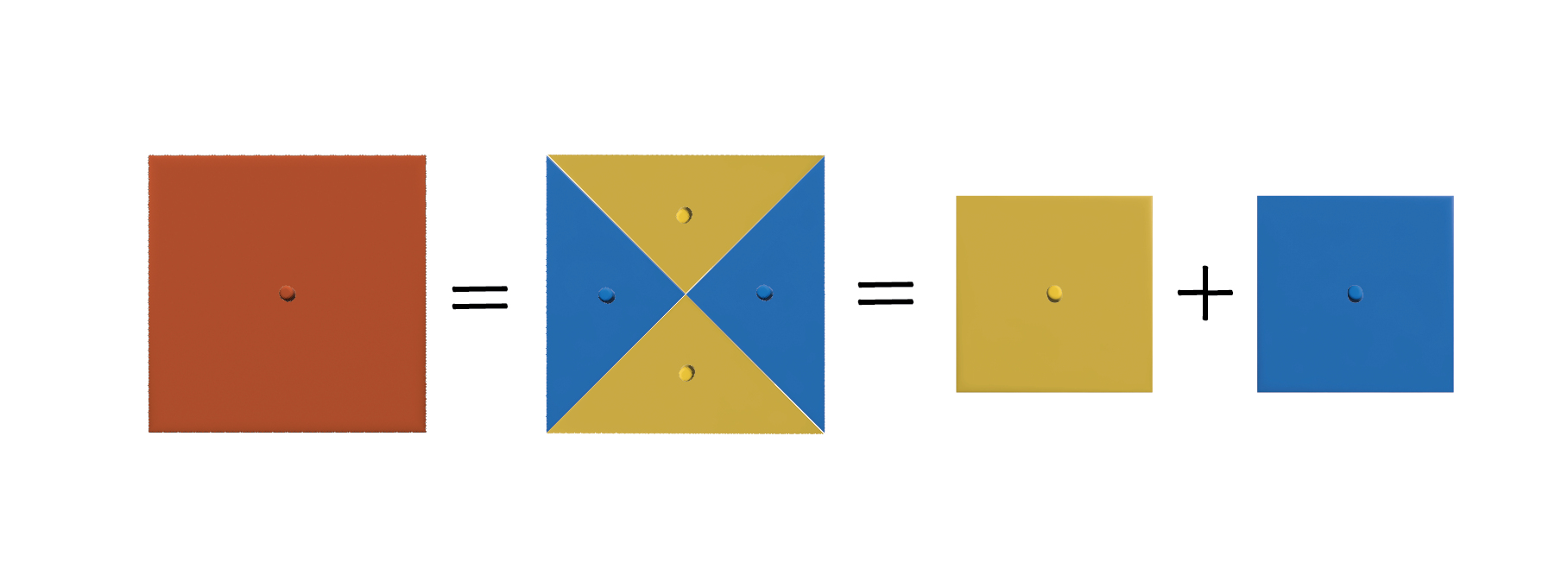
This is exactly what the Pythagorean theorem states.
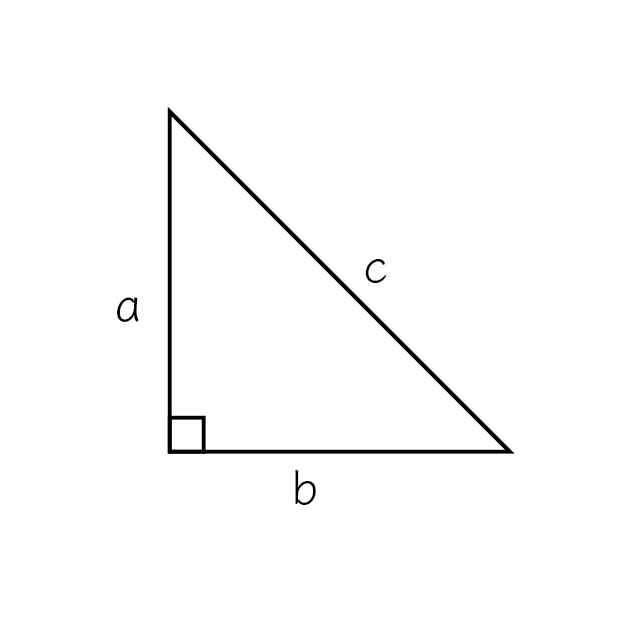
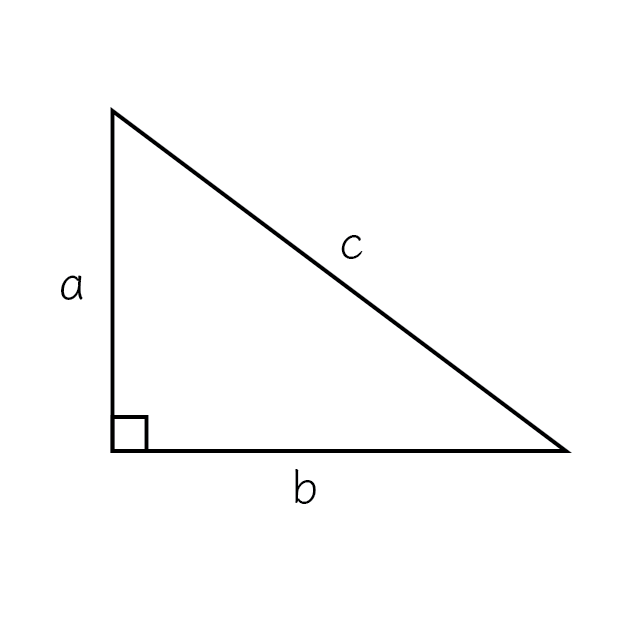
Label the side lengths as in the figure above and compare them with the white triangle in the puzzle.
- Area of the blue square
- Area of the yellow square
- Area of the red square
So the result we obtained by manipulating the puzzle,
“area of the large red square area of the blue square area of the yellow square,“
expresses the Pythagorean theorem .
② A Right Triangle with Sides in the Ratio 3:4
We will use the material made from Craft Kit ②.
You can check that you have all the pieces against the figure below.
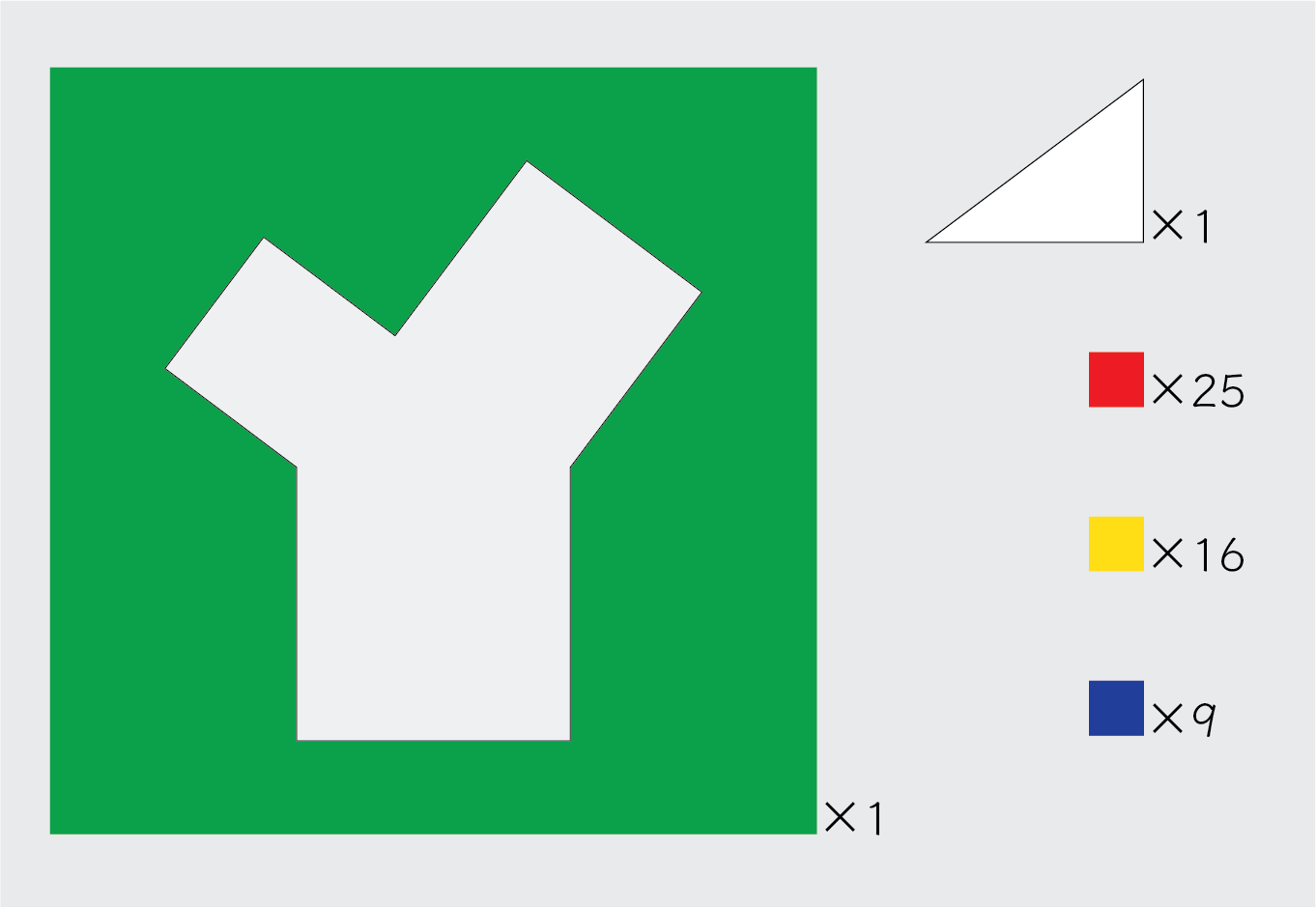
As with the first puzzle, our plan is to replace the pieces of the large red square with yellow and blue pieces.
First, arrange the pieces as shown in the figure below.
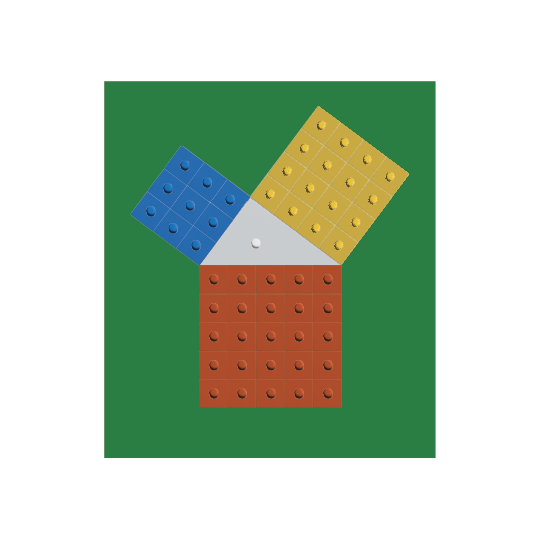
Remove one red piece and set it below the frame. Place a yellow piece in the empty space.
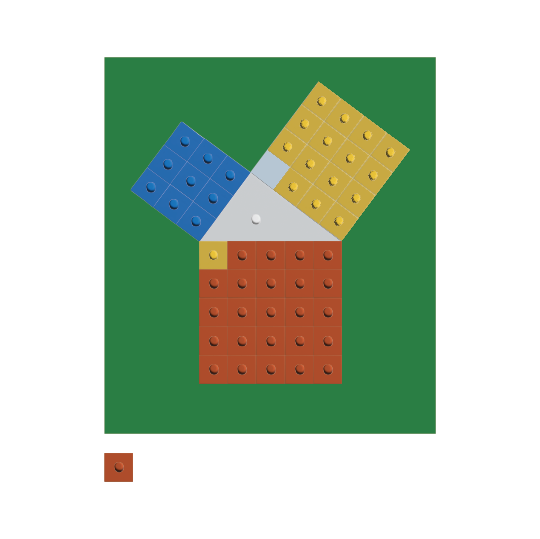
Place a new red piece in the space left by the yellow piece. Then place a new yellow piece in the space left by that red piece.
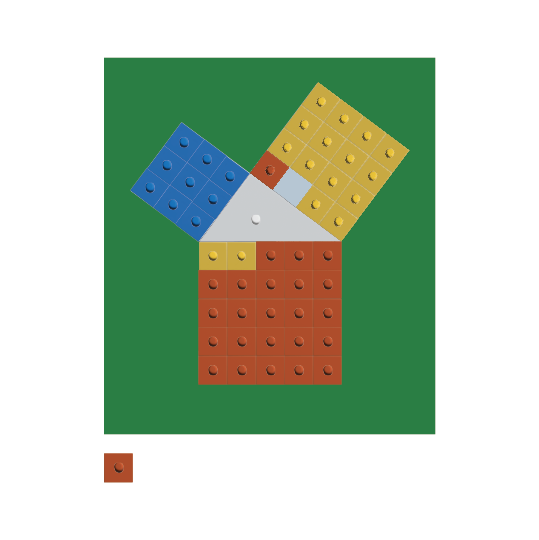
Repeat this until every yellow piece has been swapped for a red piece.
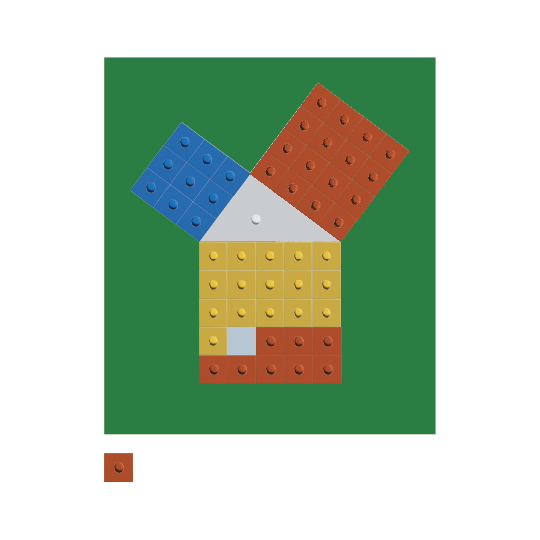
Swap the blue pieces in the same way.
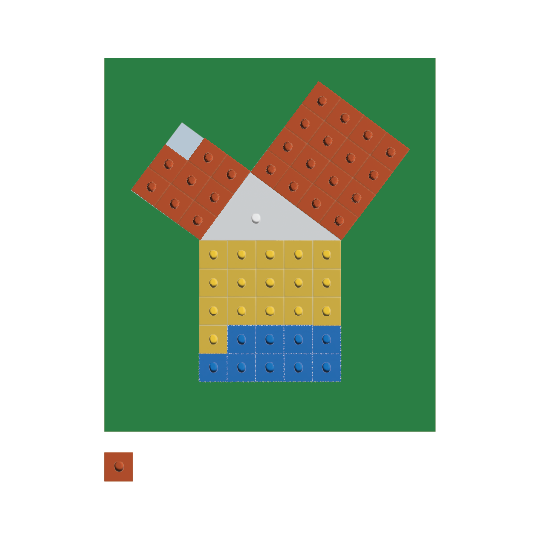
Finally, place the red piece you removed at the start in the last remaining space.
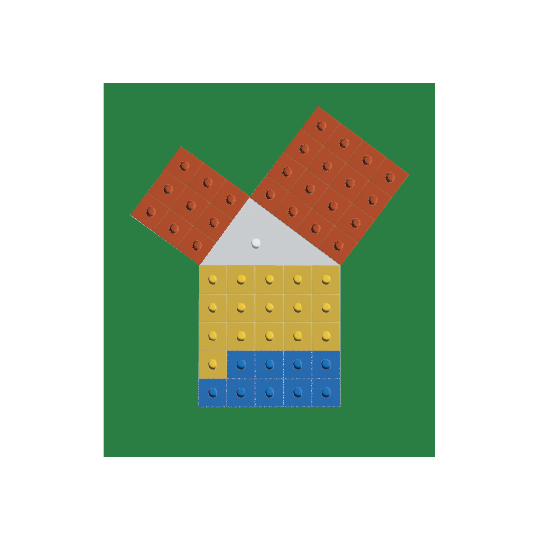
Every piece fits, with nothing missing and nothing left over.
This shows the following:
- Area of the large red square area of the 25 red pieces
- Area of the 25 red pieces area of the 9 blue pieces area of the 16 yellow pieces
- Area of the 9 blue pieces area of the 16 yellow pieces area of the blue square area of the yellow square
Therefore:
- Area of the large red square area of the blue square area of the yellow square
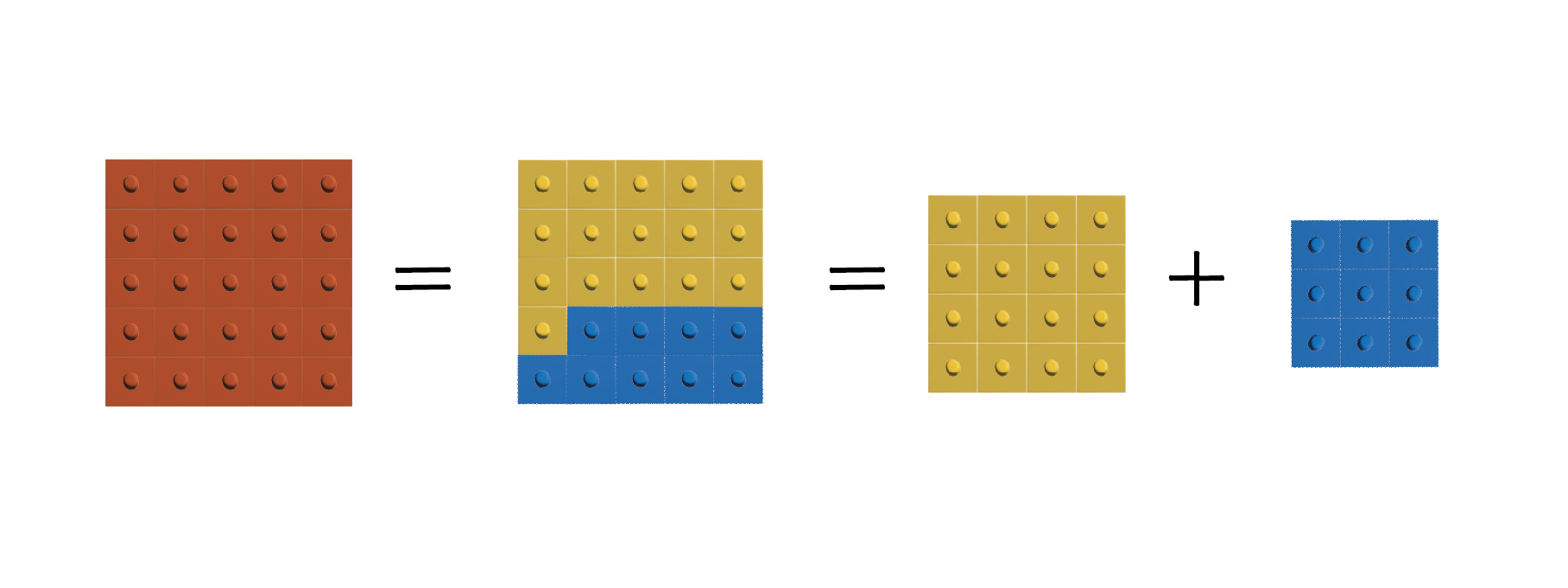
As in the case of the isosceles right triangle, label the side lengths as in the figure and compare them with the white triangle in the puzzle.
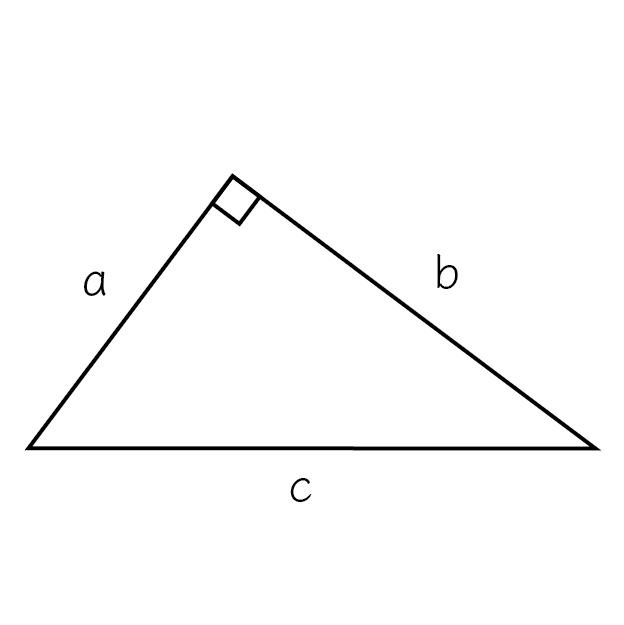
- Area of the blue square
- Area of the yellow square
- Area of the red square
So the result we obtained by manipulating the puzzle,
“area of the large red square area of the blue square area of the yellow square,“
expresses the Pythagorean theorem .
③ Any Right Triangle
We will use the material made from Craft Kit ③.
You can check that you have all the pieces against the figure below.
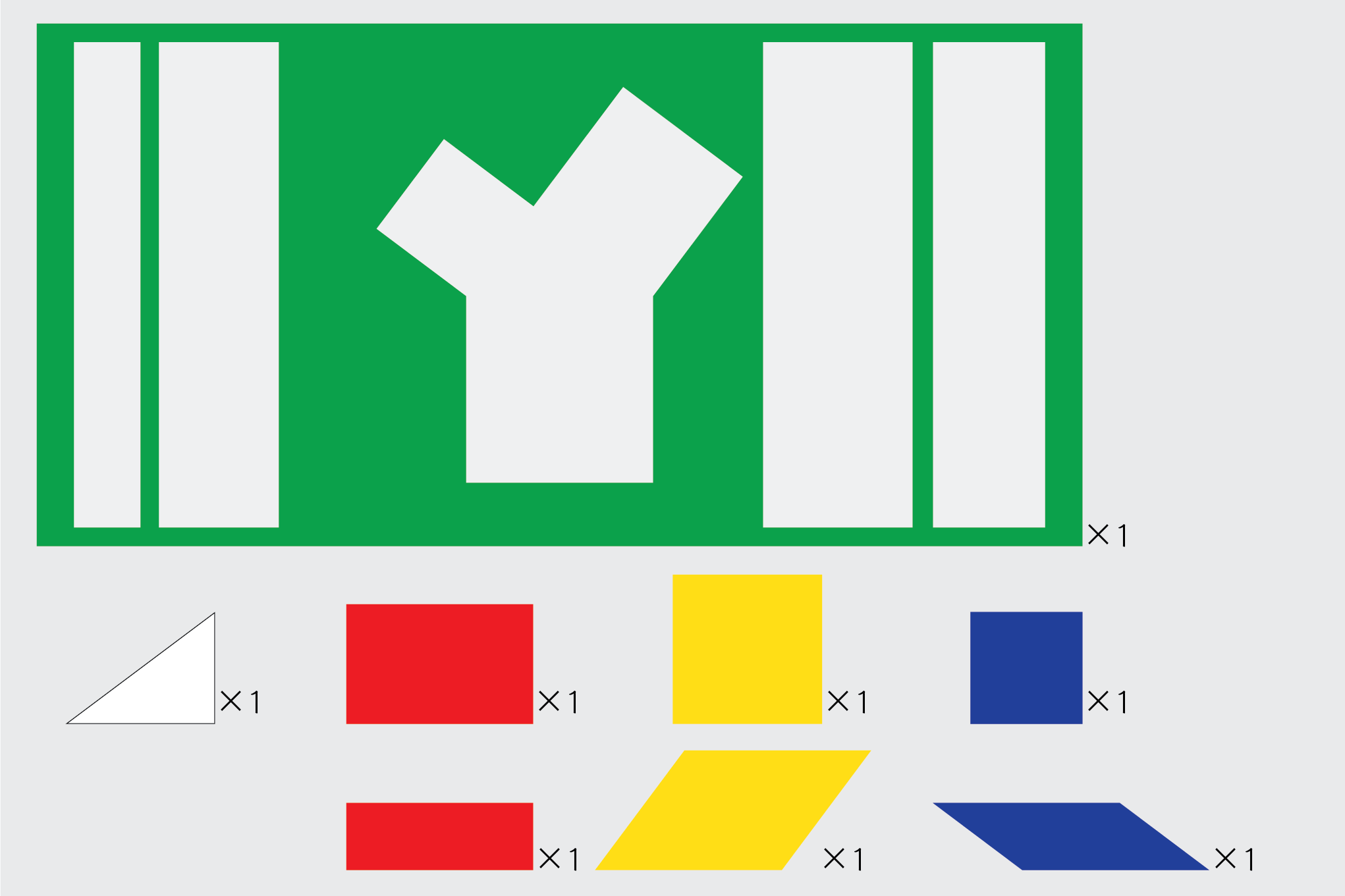
There are several ways to prove the theorem with this puzzle, but here we will look at a method that uses only the middle frame. Please ignore the two tall rectangular frames on either side for now.
First, arrange the pieces as shown in the figure.
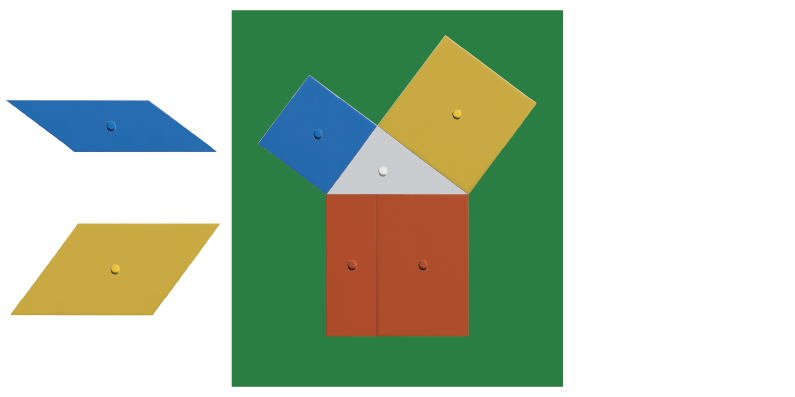
Set the two red rectangles outside the frame. Slide the white right triangle in the center down to the bottom of the frame.
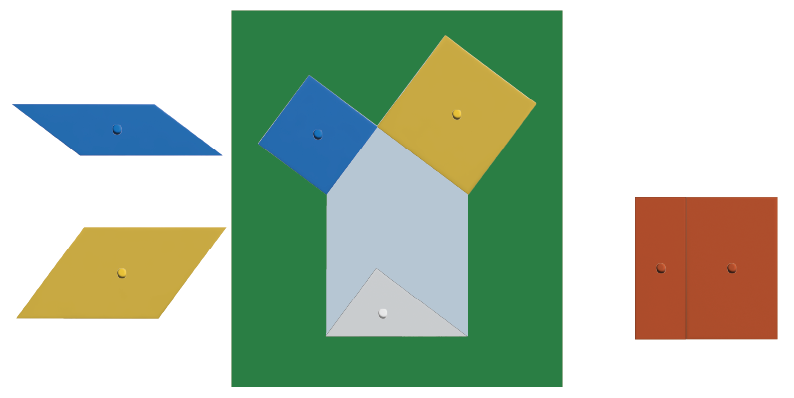
Place the blue parallelogram and the yellow parallelogram in the space that has opened up.
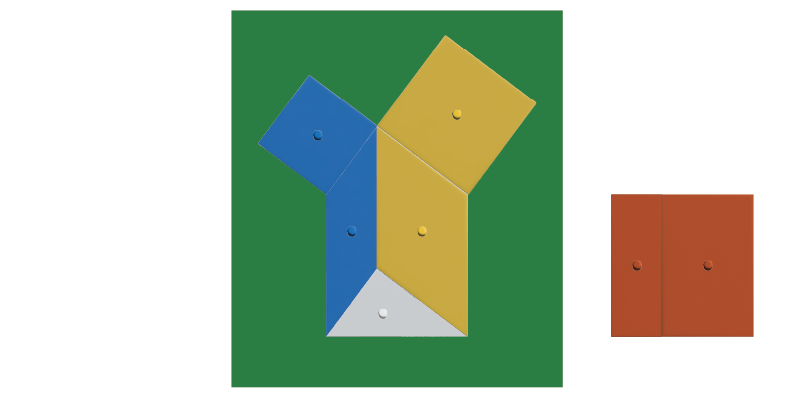
They fit exactly, which shows that the combined area of the two red pieces equals the area of the blue parallelogram plus the area of the yellow parallelogram.

Return the pieces to their starting position.
Set the yellow square outside the frame. Slide the white right triangle in the center up to the top right of the frame.
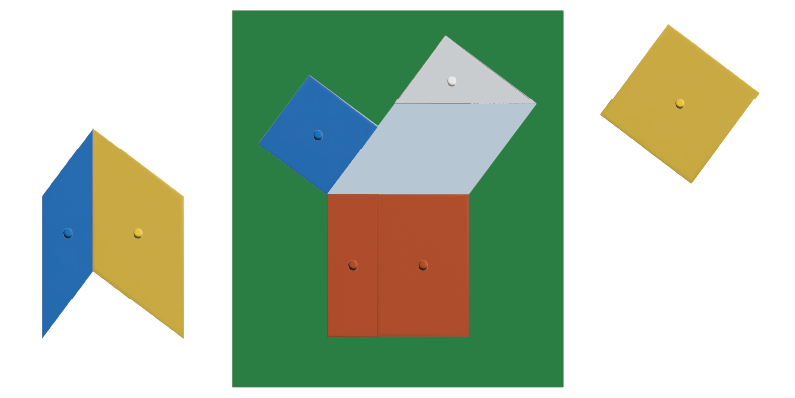
Place the yellow parallelogram in the space that has opened up.
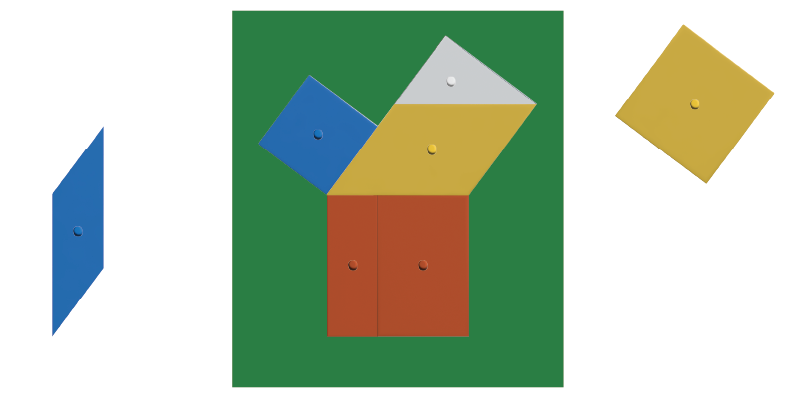
It fits exactly, which shows that the area of the yellow square equals the area of the yellow parallelogram.

Return the pieces to their starting position.
Set the blue square outside the frame. Slide the white right triangle in the center up to the top left of the frame.
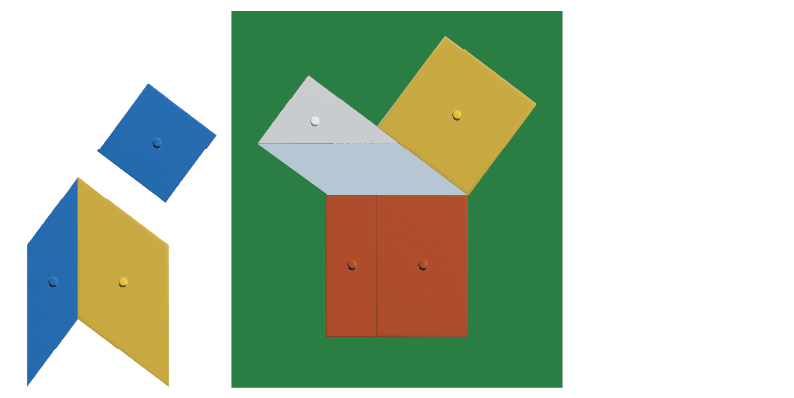
Place the blue parallelogram in the space that has opened up.
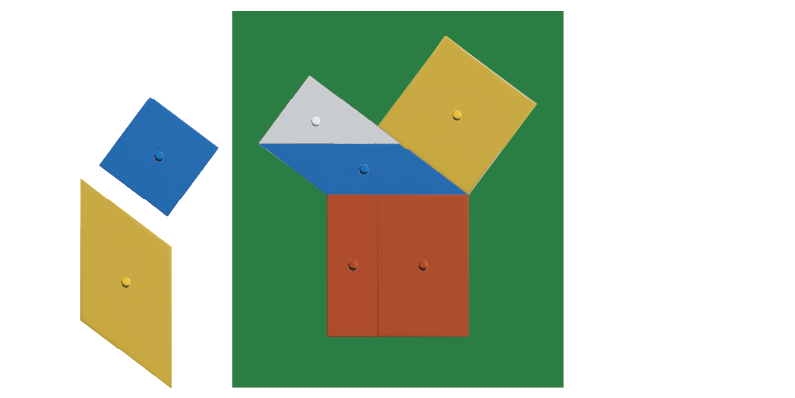
It fits exactly, which shows that the area of the blue square equals the area of the blue parallelogram.

With the blue and yellow parallelograms acting as go-betweens, we have shown the following:
- Area of the large red square area of the blue square area of the yellow square
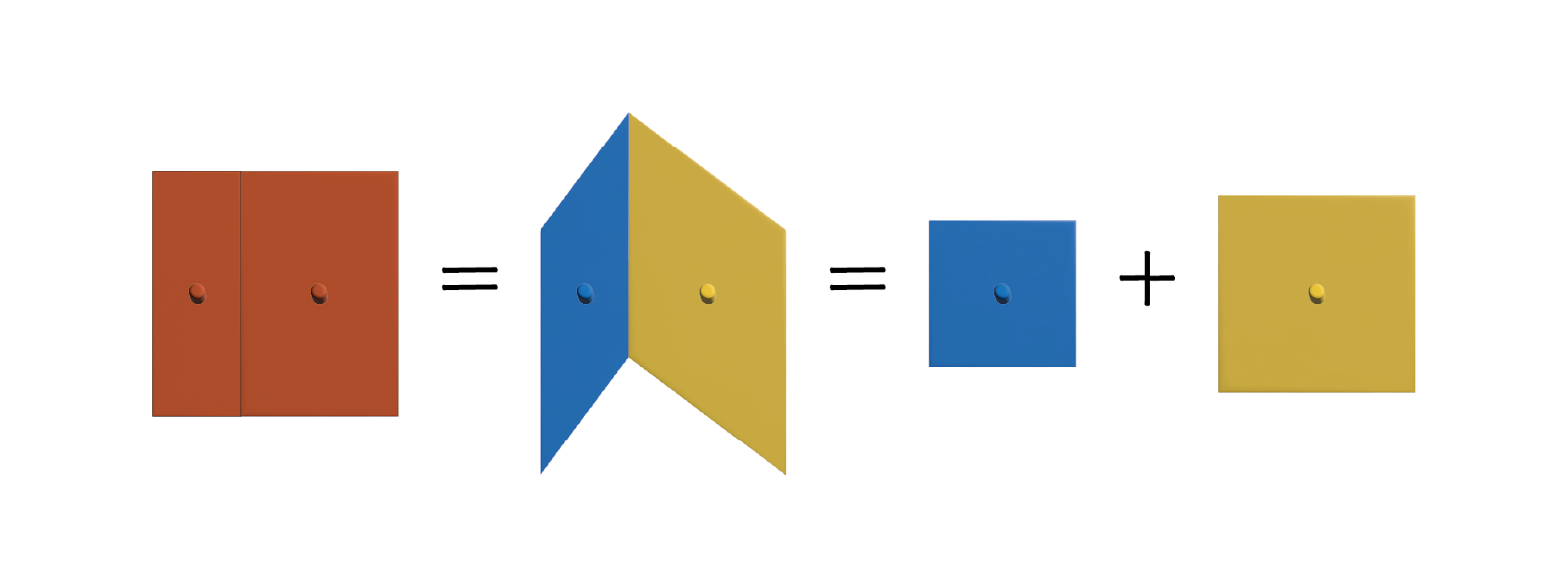
As in the previous cases, label the side lengths and compare them with the white triangle in the puzzle.
- Area of the blue square
- Area of the yellow square
- Area of the red square
So the result we obtained by manipulating the puzzle,
“area of the large red square area of the blue square area of the yellow square,“
expresses the Pythagorean theorem .
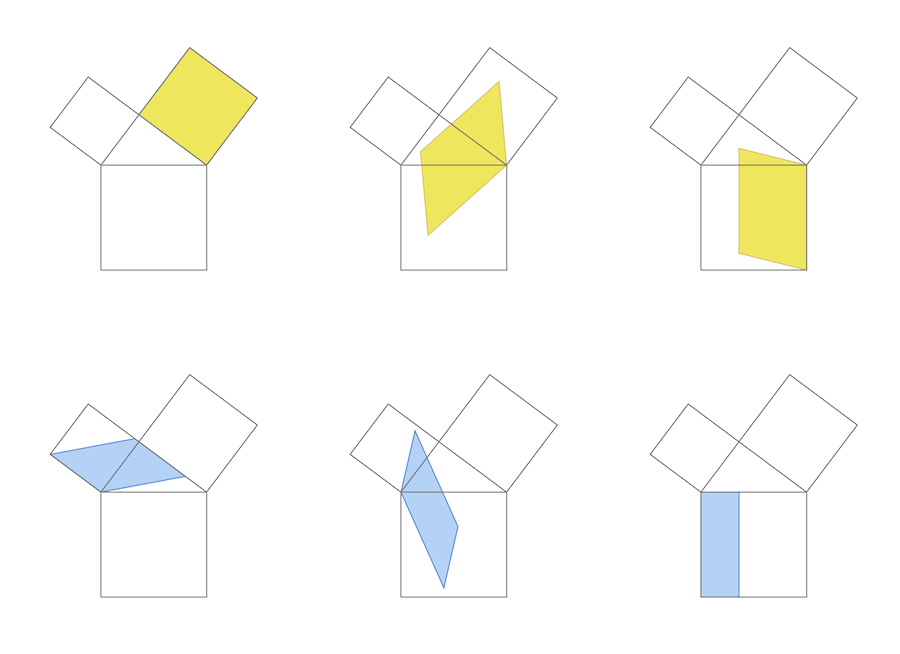
Euclid’s Proof of the Pythagorean Theorem
The animation below illustrates Euclid’s proof of the Pythagorean theorem.
If you watch it after working with the material, you may discover something new.
Summary
Thank you for reading this far. The step-by-step instructions were long and probably hard to follow, but what really matters comes down to one thing: children trying things out with their own hands, through trial and error, and discovering something for themselves.
Those of you with fine mathematical minds may have plenty of quibbles, about mathematical rigor and so on. But as Seymour Papert said, for children, learning mathematics means living in “Mathland” and growing familiar with mathematics the way one picks up French naturally by living in France3; and as Maria Montessori said, “Great creations come from the mathematical mind, so we must always consider all that is mathematical as a means of mental development”4.
Children’s curiosity and spirit of inquiry are boundless. I believe it is self-evident that when these are properly nurtured and focused in a good direction, great and peaceful progress follows for society, and ultimately for civilization itself. At Polymath Research, as a non-profit undertaking, we are pursuing developmental theory research focused on the polymathic potential of human beings, and creating environments based on that research. We would be grateful for your support.
Finding the Joy of Discovery Through Play
To close, I will share the words of Will Wright5, who learned with this very material as an elementary school student.
“The Montessori method taught me the joy of discovery. It showed me that you can become interested in quite complex theories, like the Pythagorean theorem, by playing with blocks. What matters is learning for yourself, rather than having a teacher explain things to you. SimCity comes straight out of the Montessori method.”
Quoted from Seabrook, John (November 6, 2006). “Game Master”. The New Yorker
Footnotes
-
Montessori education is not whole-class instruction, so when a child learns something depends on the child. The Pythagorean theorem material introduced here is designed to be used from age 9. ↩
-
The proof of the Pythagorean theorem appears as Proposition 47 in Book I of the Elements. ↩
-
“The idea of “talking mathematics” to a computer can be generalized to a view of learning mathematics in “Mathland”; that is to say, in a context which is to learning mathematics what living in France is to learning French.”, Papert, Seymour. Mindstorms: Children, Computers and Powerful Ideas. ↩
-
“Great creations come from the mathematical mind, so we must always consider all that is mathematical as a means of mental development.”, Maria Montessori – The Discovery of the Child. ↩
-
An American game designer, creator of the simulation game SimCity and the rest of the Sim series. ↩
Newer post
Mental Starvation Is Invisible
2024.02.07
Older post
Nice to Meet You
2024.01.01